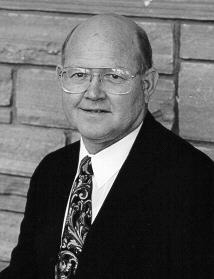
R. K. (Rod) Heitschmidt
FieldRangeland ecology
SiteTexas Experimental Ranch, Throckmorton, Texas

Same ground. Three ways of grazing it. What changes?

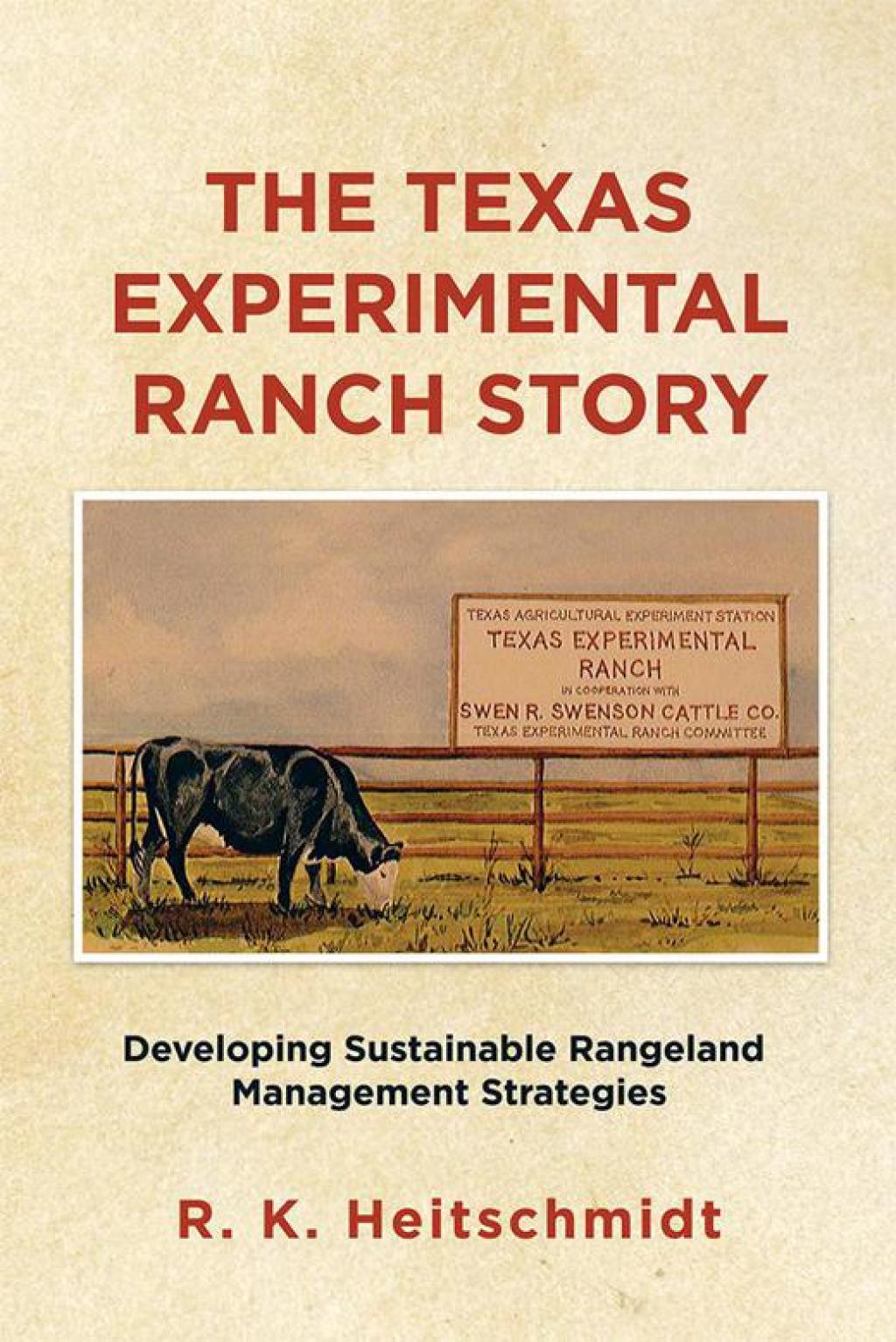
Cover of The Texas Experimental Ranch Story: Developing Sustainable Rangeland Management Strategies, by R. K. Heitschmidt. A painting shows a cow grazing at a fence below the ranch's sign.

From 1960, the Texas Experimental Ranch grazed its pastures three ways, side by side. Rangeland scientist Rod Heitschmidt studied those pastures. His book, The Texas Experimental Ranch Story, retells all 53 refereed papers the ranch’s researchers published, in order.

Find the book

Heavy continuous 5.1 ha per cow · one pasture, grazed yearlong

Moderate continuous 7.6 ha per cow · one pasture, grazed yearlong

Deferred rotation 7.2 ha per cow · four pastures, three herds

Each small square is one hectare. Each coloured block is one cow’s share of the land at the treatment’s average stocking rate, 1960–1978.

Which treatment did best? It depends what you count.

The ranch measured cattle as well as grass. In 1982, Heitschmidt and two colleagues reported the cow-calf results from 1960 through 1978. Count production per cow, then per hectare, and the order changes.

Heavy continuous 5.1 ha per cow

18235.9 kg per cowkg per ha

Moderate continuous 7.6 ha per cow

18925.2 kg per cowkg per ha

Deferred rotation 7.2 ha per cow

20227.8 kg per cowkg per ha

Per cow, the rotation led and the heavily stocked pasture came last.Per hectare, the heavily stocked pasture led: more cows on the same ground.

Cow-calf results, averages for 1960–1978
TreatmentLand per cowCalf weaning weightProduction per cowProduction per hectare
Heavy continuous5.1 ha204 kg182 kg35.9 kg
Moderate continuous7.6 ha212 kg189 kg25.2 kg
Deferred rotation7.2 ha217 kg202 kg27.8 kg

Source: R. K. Heitschmidt, M. M. Kothmann and W. J. Rawlins, “Cow-calf response to stocking rates, grazing systems, and winter supplementation at the Texas Experimental Ranch,” Journal of Range Management 35 (1982): 204–210. Read the abstract (opens in a new tab)

The book · 2015

Fifty-three papers, retold in the order they appeared

The Texas Experimental Ranch Story: Developing Sustainable Rangeland Management Strategies is a chronological overview of every refereed journal article published by researchers at the ranch. For each study, Rod sets out its goals, its methods, its findings and its conclusions. It is written to be of practical value to professional range managers and to ranchers.

53 refereed papers, one after another.

  1. GoalsWhat the researchers set out to learn
  2. MethodsHow they tested the question on the ranch
  3. FindingsWhat the measurements showed
  4. ConclusionsWhat they took from it
Publisher
Xlibris, 25 November 2015
Length
142 pages · 9 chapters, 4 appendices
Formats
Softcover, hardcover, e-book
Detail of the cover painting: a black cow with a white face grazes beside a rail fence. Behind it a sign reads Texas Agricultural Experiment Station, Texas Experimental Ranch, in cooperation with Swen R. Swenson Cattle Co., Texas Experimental Ranch Committee.

Read the sign on the cover

  1. Texas Agricultural Experiment Station
  2. Texas Experimental Ranch
  3. in cooperation with
  4. Swen R. Swenson Cattle Co.
  5. Texas Experimental Ranch Committee

The ranch began in 1959 near Throckmorton, Texas. Its three grazing treatments ran long enough for a 1985 research bulletin by Heitschmidt, S. L. Dowhower, R. A. Gordon and D. L. Price to follow the vegetation under them across 22 years of observations.

Read the 1985 bulletin at Texas A&M (opens in a new tab)

Rod Heitschmidt in a dark suit and patterned tie, wearing glasses, in front of a stone wall. Black-and-white photograph, 2003.
Your author photo can appear here.
USDA Agricultural Research Service, Fort Keogh, 2003

From a Kansas farm to the Fort Keogh range

Rod Heitschmidt grew up on a farm in north-central Kansas and earned his B.S. and M.S. at Fort Hays State University. He flew as a U.S. Air Force T-38 instructor pilot at Laughlin Air Force Base before taking a Ph.D. in rangeland ecology at Colorado State University in 1977.

He spent the next thirteen years as a rangeland scientist at the Texas A&M Research and Extension Center near Vernon, Texas, then led the 55,000-acre USDA Agricultural Research Service Fort Keogh Livestock and Range Research Laboratory near Miles City, Montana, as Research Leader and Superintendent until he retired at the end of 2006.

  1. 1967–68 Fort Hays State, B.S. and M.S.
  2. 1970–74 T-38 instructor pilot, Laughlin AFB, Del Rio, Texas
  3. 1977 Ph.D., rangeland ecology, Colorado State
  4. 1977–90 Rangeland scientist near Vernon, Texas
  5. 1990–2006 Research Leader and Superintendent, Fort Keogh, Montana

The long view went with him. At Fort Keogh he co-authored a repeat-photograph record of eighty years of vegetation and landscape change across the Northern Great Plains, and reported on a grazing study designed to measure the effects of cattle grazing over more than twenty years.
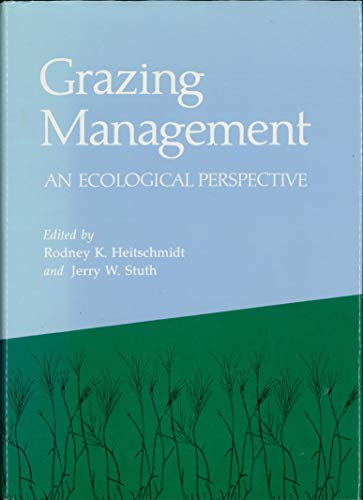
Further reading

Interview · 9 July 2026

Hear Rod on a lifetime of range research

On episode 185 of the Art of Range podcast, Rod talks about stocking rates, rotational grazing, drought and the ecological textbook.

The same ground, read study by study.

Find The Texas Experimental Ranch Story by R. K. Heitschmidt.